



Market Analysis
The 2020 Pandemic Crash and Stimulus Rally: Lessons Every Long-Term Investor Should Know
At the height of February 2020, stock prices began to tumble. However, by the end of March, the S&P 500 had plunged approximately 34 percent within a mere 33 days – one of the fast
- By
- Nora Kim
- Published
- Last updated
- Reading time
- 12 min read
Key takeaways
- Most investors were surprised by how quickly the crash in 2020 was followed by a recovery.
- Many investors were influenced by fear, the media and others to make bad timing decisions.
- If you miss just a few strong rebound days, it will dramatically affect your long-term investment returns.
- Using a rules-based system should provide you with a more reliable method for making decisions based on probability than simply trying to predict future events.
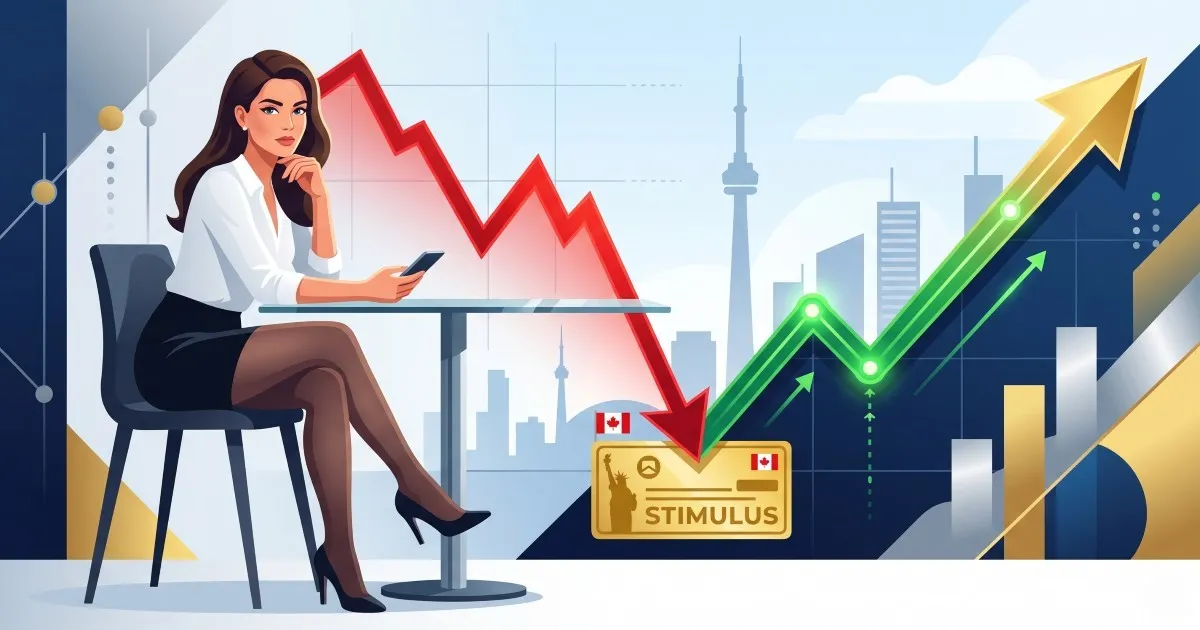
At the height of February 2020, stock prices began to tumble. However, by the end of March, the S&P 500 had plunged approximately 34 percent within a mere 33 days – one of the fastest declines in the modern history of stocks. The significant fall took place in less than one month; just as quickly, a rebound began to form that lasted throughout the balance of 2020. As of December 2020, the stock market (as measured by the S&P 500) was higher than at the beginning of 2020. Had you been sleeping through all of 2020 and reviewed your investment portfolio after waking up on January 1, 2021, you would have likely seen nothing out of the ordinary. In contrast, investors who were awake experienced what some may have considered a catastrophe financially and throughout all facets of their lives. As such, the stock market’s rise from the depths of the 2020 crash to its ultimate recovery can serve as an important case study in market behavior for all players in the investment community. This lesson will not come from simply examining the numbers; rather, it will emerge from analyzing the impact of government policies, the actions of investors and the disparity between actual economic activity and the activities of investors in the stock market.
What the Crash Looked Like in Real Time
On February 19, 2020, the S&P 500 index reached its greatest point. The majority of individuals were aware of a new coronavirus that was spreading in China and Asia at that time, but the rest of the world had yet to model the possibility of a pandemic occurring across all markets. Between February 20 and March 23, 2020, the S&P 500 index decreased by approximately 34%. This translates into a loss of roughly $10-$12 trillion dollars in market value within a little over one month. The S&P 500 index lost value at a rate that has never been experienced before in market history. In fact, this is very different than previous experience with stock market crashes like the one in 2008, which took significantly longer for the event to unfold. In March of 2020, four times, circuit breakers (which are automatic trading halts that are intended to reduce panic selling) were activated by the exchanges. The last time circuit breakers had been activated was in 1997. Since there were four activations in just one month, this created an almost robotic, erratic nature to the S&P 500 index’s precipitous decline. While oil prices were experiencing a price war between Saudi Arabia and Russia, the situation was made worse. Due to travel bans from COVID-19, demand for crude oil fell like a rock in early March; just as crude oil prices were headed toward the bottom of the barrel. In late April 2020, US oil futures were traded for a very short period of time at negative dollar amounts (i.e., producers paid buyers to take the oil off their hands, as they ran out of space to store oil).For investors watching this in real time, it was not obvious that markets would recover in months. The 2008 financial crisis took more than five years for the S&P 500 to fully recover. Historical recoveries from severe crashes measured in years, not months.
The Government Response Changed Everything
In 2020, unprecedented speed and size of the government’s efforts to stabilize the economy after the market crash of 2020 left us in a very different place than we had been following the previous market crisis. The US Federal Reserve responded to the crisis by lowering interest rates to near zero and announcing an unlimited quantity of quantitative easing, where they would buy government and other assets in order to inject money into the banking system. To illustrate the scale of the financial assistance being provided by central banks around the world, you can visit a variety of countries, including Canada, the UK, and different countries in the Eurozone, and you would have seen that they all initiated some actions or economic assistance programmes similar to the above. In addition, national governments around the world, and also in Canada and the US, launched massive fiscal stimulus programmes. The Care Act, which was passed in late March 2020, authorised roughly $2.2 trillion in emergency federal funding to help provide direct payments to individual Americans, additional unemployment benefits, and loans to businesses that had been impacted by the pandemic. Similar economic assistance programmes were announced across Canada, including the Canada Emergency Response Benefit and other programmes, which were designed to replace the income of many millions of Canadians that suddenly could not work. The combination of near-zero interest rates and massive direct payments of emergency funding were the main factors that led to asset prices being able to maintain their current levels (and in some cases increase) even with the weak fundamentals of the economy that were in place at that time. Because of the low yields from cash and government bonds at zero per cent, relatively risk-averse investors who would have otherwise moved to safer investments were unable to find an acceptable risk-adjusted yield on those assets. Thus, relative to cash and government bonds, stocks offered a return from the dividends that would normally be paid during the time period and an additional uncertainty discount relative to the recovery rate of the underlying company over time.This is not a political observation. It is a description of how policy choices affected market outcomes. Understanding it matters for any investor trying to draw lessons from 2020.
The Recovery Was Faster Than Anyone Expected
The S&P 500 bottomed on March 23, 2020. The World Health Organization declared COVID-19 a pandemic on March 11. Major lockdowns were just beginning across North America and Europe. Hospital systems were preparing for scenarios that, in some regions, proved as bad as feared. Against that backdrop, markets began recovering immediately from March 23 onward. By August 2020, the S&P 500 had returned to its pre-crash highs. By the end of 2020, it was up about 16 percent for the full year despite everything that had happened. The disconnect between economic conditions and market performance was jarring for many people. Unemployment was at its highest level since the Great Depression while markets were setting new records. Restaurants, hotels, airlines, and retailers were devastated while technology companies, which benefited from remote work and e-commerce, were surging. The explanation is that stock markets are forward-looking. They reflect expectations about future earnings, not current economic conditions. By mid-2020, markets were pricing in vaccine development, policy support, and eventual normalization. Whether that forward-looking optimism was warranted was debatable in the moment. In hindsight, it turned out to be largely correct.
A Concrete Scenario: Three Investor Responses
Three investors each had $50,000 in a diversified stock portfolio in February 2020. The first investor, call her Maria, panicked and sold everything in late March at or near the bottom. She moved to cash, planning to reinvest when things looked safer. By the time things looked safer, markets had already recovered substantially. She reinvested in late 2020 near the highs, capturing very little of the recovery. The second investor, James, did nothing. He had set up automatic contributions and had a rule against checking his portfolio more than once a quarter. He held through the crash without selling. By the end of 2020, his portfolio was worth more than it had been at the start of the year. The third investor, Aiko, had some cash available and invested an additional $10,000 in late March near the market bottom, while also holding her existing portfolio. Her existing portfolio recovered along with the market, and the additional investment she made at depressed prices produced outsized short-term gains. These three outcomes reflect three real behavioral patterns that played out across millions of investors in 2020. Maria’s outcome was the most common. Most investors who sold near the bottom did not get back in at the right time.
Why Selling at the Bottom Is So Common
The behavioral economics of a market crash are well understood, even if they’re difficult to act on in the moment. When markets fall sharply, the news coverage intensifies. Every financial commentator has a reason why this crash is different from previous ones and why the usual recovery patterns will not apply. The emotional experience of watching your portfolio decline by 30 percent in a month activates loss aversion, which is the psychological tendency to feel losses more acutely than equivalent gains. Fear of further loss overrides the rational expectation that markets will eventually recover. Selling during a crash feels like a rational protective act. And sometimes it is. In a genuine worst-case scenario, an investor who sold in March 2020 and held cash would have been protected against further losses. The fact that the worst case did not occur in 2020 does not mean the fear was irrational. What makes this so difficult is that there is no reliable way to distinguish a temporary crash from the beginning of a prolonged depression in real time. In 2009, the bottom turned out to be March of that year, but investors did not know that until much later. The same was true in March 2020. The best protection against the impulse to sell at the bottom is not to suppress emotion. It is to have a predetermined plan, an investment policy statement of some kind, that defines in advance what you will and will not do during a crash. Written rules made when calm are more reliable than in-the-moment decisions made under fear.
What the Stimulus Rally Taught Us About Market Mechanics
The 2020 recovery also illustrated something important about how monetary policy and asset prices interact. When interest rates are near zero and central banks are actively purchasing assets, money flows into risk assets like stocks because the alternatives offer very little. This is sometimes called the TINA effect: There Is No Alternative. Investors who needed their money to grow could not rely on savings accounts, GICs, or government bonds at near-zero yields. Equities were the remaining option for meaningful expected returns. This dynamic drove asset prices higher across the board in 2020 and 2021: stocks, real estate, cryptocurrencies, and even some categories of art and collectibles. When interest rates began rising in 2022 to combat inflation, many of those asset prices corrected sharply because the TINA dynamic reversed. Suddenly there was an alternative: government bonds paying 4 or 5 percent. Understanding this mechanism helps investors make sense of price movements that seem disconnected from economic reality. Asset prices do not only reflect the health of underlying businesses. They also reflect the relative attractiveness of different places to put capital, which is directly affected by interest rates and policy.
What This Means Today
The 2020 Crash and Recovery Have Given Us Some Important Lessons for Long-Term Investing. Historical precedent does not guarantee a timeline for recovery after a market crash. Therefore, it is risky to commit to a specific timeline for re-entry based on historical patterns due to the unpredictable nature of market behavior. Government and central bank responses to crises now happen more quickly and largely compared to previous decades (though they do not guarantee that the next crash will recover that fast), and this is an important factor to consider when evaluating the impact of a future crash. There is historically better investment performance that comes from staying invested during market crashes, even if this is emotionally painful, than timing the market for exit and re-entry. Those who stayed invested in 2020 were more successful than those who attempted to time their investments. Lastly, an ongoing and repeated gap exists between the economic environment and the valuation of an equity market. The equity market does not reflect the economy. If an investor misunderstands this, they will be tempted to use economic headlines as a guide for investment decisions.
Common Mistake to Avoid
The biggest misconception about 2020 is that all crashes are quick and sharp, and you should always buy whenever the market declines. The 2020 crash was exceptionally quick both ways and had a historic policy response in support of the economy. A crash in other circumstances could take a long time to recover from due to a lack of policy support, or a fundamentally weaker economy. On a historical basis, buying in a market crash has been a good long-term strategy if you have cash available to invest, which also means you have some money that is not fully invested at all times; as well as the ability to wait for a recovery to avoid having to sell to cover expenses during the recovery period. The error is viewing 2020 as the model for how all market crashes behave, and not realizing that 2020 was a very unique crash, with very specific characteristics, including a very significant policy response, that are not likely to occur again.
Conclusion
The pandemic induced crash of 2020 and the related stimulus rally quickly illustrated how investor psychology moves rapidly, how fear can quickly spread through the financial markets and that decisions based upon fear are detrimental to long-term investment outcomes. It also demonstrated how governmental policy has the ability to create market dislocations that do not correlate with the economic fundamentals of the elements underlying the investment value of an asset class as well as how the least active investors tended to do the most well. Within 33 calendar days the S&P 500 fell 34% and returned to its peak price around 5 months later. This return was atypical (quick) and based upon certain economic conditions. However, the important principle about long-term investing is that an individual who has a long-term plan and is disciplined to see it through all the volatility and uncertainty has a much greater likelihood to achieve their investment goals than individuals who let emotions drive their actions. This is true whether the crash is due to a natural disaster (hurricane or earthquake) or a man-made circumstance (credit crisis).
Frequently Asked Questions
How much did the stock market fall during the 2020 pandemic crash?
The S&P 500 fell approximately 34 percent from its peak on February 19, 2020, to its trough on March 23, 2020, a period of about 33 days. This made it one of the fastest crashes of that magnitude in market history. Canadian markets, as measured by the S&P/TSX Composite, experienced a similar decline of roughly 37 percent over a similar period. Both markets had recovered their losses and reached new all-time highs by late 2020.
Why did markets recover so quickly after the pandemic crash?
Several factors contributed to the unusually quick recovery. Central banks, including the US Federal Reserve and the Bank of Canada, responded rapidly by cutting interest rates to near zero and expanding their balance sheets through asset purchases. Governments introduced large fiscal stimulus programs that replaced incomes for workers and supported businesses. Low interest rates made alternatives to stocks, such as cash and bonds, offer very little yield, which encouraged investors to turn to equities. Additionally, markets priced in vaccine development and eventual economic normalization faster than most economists had predicted.
What should I do with my investments during the next market crash?
This article does not offer financial advice. Historical evidence consistently shows that investors who hold through market crashes and avoid selling at or near the bottom tend to fare better than those trying to time the market. The main challenge is that in real time, it is impossible to distinguish a temporary crash from a prolonged decline. The best preparation is to have a written investment plan before a crash happens. This plan should include your risk tolerance and specify under what conditions, if any, you would adjust your allocation. Having emergency cash reserves separate from your investment portfolio is also helpful, as it reduces the need to sell investments at a depressed price to cover living expenses.
If you want to test this framework with your own numbers, use the interactive calculator and then compare outcomes in the Nvidia 2016 historical scenario.

About the author
Nora Kim
Market Analysis Writer
Nora covers company case studies, market recoveries, and practical lessons from historical investing outcomes.
Background
Nora Kim is the Market Analysis Writer and official Reviewer at FomoDejavu. She delivers in-depth company case studies, examines market recoveries, and extracts actionable lessons from historical investing outcomes. With a sharp eye for what actually drives stock performance and portfolio resilience, Nora’s work helps readers learn from past market cycles rather than repeat common mistakes. Her dual role as writer and reviewer ensures every article and calculator page meets the site’s high standards for accuracy, clarity, and educational value.
Methodology note
Figures are educational estimates based on historical market data and stated assumptions. They do not include every real-world variable (taxes, slippage, fees, behavior, or account constraints). Re-run the scenario with your own inputs before making decisions.
Related articles
Related tool
Backtest this idea with the investment calculatorMove from theory to measurable historical outcomes.