



Investment Education
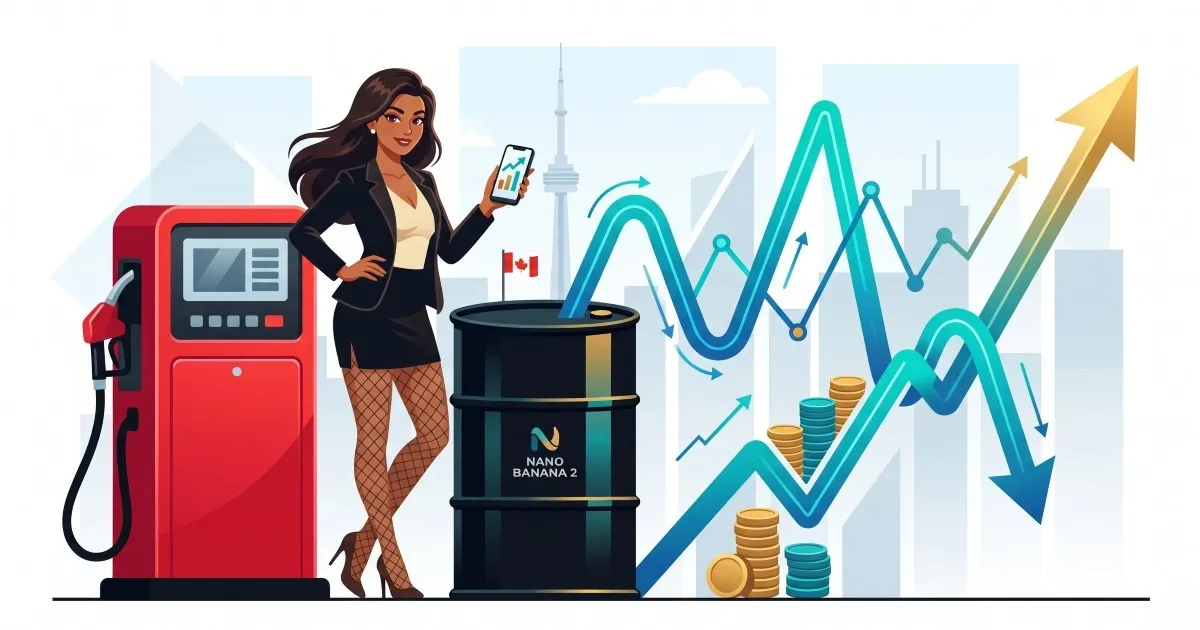
The Rollercoaster of Oil and the Danger of FOMO
Investing in oil at an all-time high can induce an overwhelming amount of FOMO or 'fear of missing out'. Crude oil prices have risen to record highs, exceeding $100 or more per bar
- By
- Fiona Lake
- Published
- Last updated
- Reading time
- 10 min read
Key takeaways
- Oil is purchased by emotions in times of crisis which frequently results in investors buying at peaks and selling in a panic later on.
- The crash of oil prices in 2020 showed how rapidly oil-related assets can fall and then rebound back to near original levels but many investors are not able to psychologically recover those losses in that same time period.
- The most common way for an investor to gain exposure to oil is through exchange-traded funds (ETF) or energy-related stocks so before investing it’s critical to familiarize yourself with how these products work.
- A well-thought-out strategy, a proper position size and having enough capital to cover emergencies are much more important than attempting to predict the next price movement based on a news headline.
Investing in oil at an all-time high can induce an overwhelming amount of FOMO or ‘fear of missing out’. Crude oil prices have risen to record highs, exceeding $100 or more per barrel and energy stocks are increasing across all financial television stations. These record-high prices and the anticipation of further price growth make it seem as if the move is just starting.
Then, suddenly, the cycle quickly reverses and declines rapidly.
The oil market is one of the most volatile commodity markets in existence today and has experienced sharp upward and downward movement throughout its history. These unpredictably volatile price movements are often caused by forces that are outside the control or observation of analysts, businesses, or even insiders in the oil industry. New investors and experienced investors can become emotionally reactive and act upon their FOMO to incorrectly time their entry/exits into this volatile commodity market, resulting in substantial financial losses to both groups of investors due to their decisions based on FOMO.
What Makes Oil So Volatile in the First Place
To understand why oil is such a dangerous market to chase, it helps to understand what actually sets its price.
Global relations will impact the price of oil; supply will be dictated by how many people are willing to buy it. If there are more buyers than there are sellers, then the price will go up. If there are more sellers than buyers, then the price will go down.
Economic activity is driving demand for oil (in the way of transportation, factories, etc.), so as economies grow, there will be more demand for oil supply. Conversely, when economies begin to slow down, the demand for oil supply decreases.
The supply side of the market (what is being produced) is a bit more complicated. OPEC and its extended family, OPEC+, control much of the supply available on the world market. If OPEC+ reduces production, there will be fewer products in the hands of the consumers, which will generally lead to higher prices. If OPEC+ increases production, there will be more product available on the world market, which can lower prices.
Supply also comes from non-OPEC countries, such as the US, Canada, Norway, Brazil, and others. Events can also affect the supply of oil. Technological advancements in the oil industry can change the supply picture dramatically within a couple of years; for example, the shale oil activity in North America has changed the oil supply picture completely over the last 10 years (or so). There are many uncontrollable factors that can quickly change oil supply and demand, including wars, sanctions, natural disasters, pandemics, and civil unrest, which could result in a commodity that moves up or down very quickly according to unexpected events.
The Cycle That Repeats: Spike, FOMO, Crash
Oil doesn’t trend smoothly in one direction. It moves in cycles, and those cycles have a fairly consistent emotional rhythm that traps unprepared investors.
A genuine supply or demand event is what typically causes prices to rise initially during a cycle, for example OPEC cutting production, geopolitical tension threatening supply in a key region or a strong global economy driving up oil demand.
As prices rise and earnings surge for oil companies, the amount of media coverage on this subject increases to the point where it seems to make perfect sense for investors to begin buying oil-related securities.
It’s also at this time that many retail investors begin to experience FOMO (fear of missing out) when they see the price chart climbing and convincing analysis about the sustainability of the move upward, and thus purchase energy stocks or oil ETFs at the peak of excitement.
Once the supply-demand dynamics shift, such as when OPEC members start to cheat on their quotas or when a new source of production comes on faster than anticipated or when demand softens due to an economic slowdown or structural shift in consumption, prices will typically fall much faster than they increased.
The investor who purchased near the peak of the cycle suddenly finds themselves holding an investment that is worth far less than they paid for it with only two choices in front of them; sell at a loss or continue to hold and hope for a recovery that could take years.
Three Oil Price Crashes That Illustrate the Pattern
The modern oil market has produced several cycles dramatic enough to serve as clear illustrations.
The 2014 crash is perhaps the best example of how unexpected events can affect energy markets. From 2011 to 2014, oil prices were generally strong, averaging over $100 per barrel and drawing huge amounts of investment into energy-related businesses. This momentum was partially overrun by significantly increased U.S. shale production and far slower demand growth in China. Saudi Arabia and OPEC made a decision to not curb production to allow demand weakness and excess supply levels to drive down prices; therefore, Brent crude oil fell sharply from about $115 per barrel in mid-2014 to close to $27 per barrel in early 2016. Many oil and energy stock investors who purchased their shares at or near the peak sustained losses around 70%+.
The 2020 price collapse was even more dramatic and rapid than that of 2014. The global transportation system became essentially frozen due to COVID-19-related government lockdowns. Airlines stopped flying; road traffic all but stopped, and Industrial utilization levels dropped dramatically. Demand for Crude Oil fell at a level never before experienced in the market due to the rapid pace of the decline in demand. In April 2020, U.S. Crude Oil futures with a delivery month in May traded below $0.00 for brief periods, meaning sellers were actually paying buyers to take delivery of the oil! This is unprecedented in the modern era of crude oil pricing.
The 2022 spike and subsequent decline followed Russia’s invasion of Ukraine and the supply disruption it created. Brent crude surged past $130 per barrel in early 2022, driving renewed FOMO into energy stocks. By late 2023, prices had fallen back toward $70 to $80 per barrel as demand concerns mounted and non-Russian supply adjusted.
Each of these cycles produced a new cohort of investors who bought near the top, motivated at least partly by FOMO, and paid for it.
What FOMO Looks Like in Practice
Understanding FOMO as an abstract concept is easier than recognizing it in yourself when it’s happening.
It tends to show up as a feeling that the opportunity is closing. That you’ve already missed the early move and need to get in now before it goes higher. That the people who got in earlier are making money and you’re standing on the sidelines.
In oil specifically, it often comes with a compelling narrative. High energy prices get explained by a story: geopolitical tension that isn’t going away, a structural shift in energy policy, OPEC discipline that’s going to hold this time. The narrative feels airtight because there are real forces behind the move. The problem is that markets typically price in those real forces long before most retail investors act on them.
Consider a Canadian investor watching oil prices climb in early 2022. Every piece of analysis seemed to confirm the move. Russia was at war. OPEC was holding firm. The narrative was convincing and the data supported it. An investor who put $10,000 into Canadian energy stocks in March 2022, near the height of excitement, would have seen significant gains initially, followed by a painful consolidation as prices pulled back through 2023. Timing the entry based on FOMO, rather than a considered view of long-term value, meant buying at a point where much of the good news was already reflected in prices.
Why Oil Is Particularly Dangerous for FOMO-Driven Investing
Most assets become overvalued gradually, giving investors time to recognize the excess and adjust. Oil can move from deeply undervalued to sharply overvalued in a matter of weeks, and then back again. The speed of the cycle compresses the time available to make good decisions.
Oil ETFs and energy stocks also tend to move more dramatically than the underlying commodity in percentage terms. If oil rises 50%, some energy stocks may rise 100% or more. That amplification feels great on the way up and crushes portfolios on the way down.
Leverage adds another layer of danger. Some investors use options, margin, or leveraged ETFs to amplify their oil exposure. When the trade goes wrong, losses compound quickly.
None of this means oil is uninvestable or that energy stocks don’t belong in a portfolio. It means that entering the trade based primarily on recent price momentum and the fear of missing out is one of the most consistently expensive ways to approach this market.
What This Means Today
In 2026, oil markets remain subject to the same forces that have always driven their volatility: geopolitical tension, OPEC decisions, macroeconomic shifts, and the evolving pace of energy transition. The energy transition adds a new dimension: as electric vehicles gain market share and renewable energy grows, the long-term trajectory of oil demand is genuinely uncertain in ways it wasn’t 20 years ago. This means oil price spikes, while still possible, may attract alternative supply solutions or demand substitution more readily than in previous cycles.
For investors, the practical takeaway is to treat any oil-driven FOMO as a yellow flag that deserves scrutiny rather than immediate action. Ask whether the move is already priced in, what the downside looks like if the narrative reverses, and whether you would have reached the same conclusion if prices had been falling instead of rising.
Common Mistake to Avoid
The clearest mistake oil investors make is confusing a good story with a good entry point. The narrative around an oil price spike is usually most compelling right when prices are at or near their peak, because that’s when media attention is highest and the supporting data looks most convincing.
A secondary mistake is holding a losing oil position too long because the original thesis still seems intact. Oil markets can stay disconnected from a compelling fundamental story for longer than most investors can tolerate the pain. Having a clear plan for how much you’re willing to lose before selling is more important in commodity markets than in almost any other asset class.
Conclusion
Oil is a legitimate and important part of the global economy. It’s also one of the most emotionally difficult markets to invest in, precisely because its cycles are sharp, its narratives are compelling, and its price movements trigger FOMO at exactly the wrong moments.
The investors who do well in energy markets tend to be the ones who enter when the story is boring and prices are low, not when coverage is loud and prices are high. That’s easier to say than to do. But understanding the pattern, and recognizing FOMO when you feel it, is the first step toward not letting it make your decisions for you.
This article is for educational and informational purposes only and does not constitute financial or investment advice. Commodity investments carry significant risk. Always consult a qualified financial professional before making investment decisions.
Frequently Asked Questions
Why is oil investing so much more volatile than investing in stocks?
Oil is a physical commodity, and its price is determined by the balance of global supply and demand. This balance can change dramatically due to geopolitical events, decisions made by cartels, economic cycles, and unexpected disruptions. Unlike a company that generates ongoing revenue and builds value over time, a barrel of oil does not have any earnings. Its price is driven entirely by supply and demand dynamics, which can shift quickly and sharply. Energy stocks tend to amplify this volatility because their profits are directly linked to the price of the commodity.
What does FOMO mean in the context of investing?
FOMO stands for Fear Of Missing Out. In the world of investing, it refers to the urge to buy an asset mainly because its price has already increased significantly, and there’s a fear that the gains will continue without you. This tendency is one of the most well-documented behavioral biases seen in financial markets. It tends to be especially powerful in volatile markets like oil, where price movements can be dramatic, and the narratives supporting these movements feel particularly convincing during high points in the cycle.
Is there a safer way to get exposure to oil as an investor?
For those who want to include some energy exposure in their portfolio, a common strategy is to hold diversified energy stocks or broad-market ETFs that feature energy as one sector among many. This way, investors can capture some of the benefits when energy markets perform well while avoiding the full volatility tied to a direct oil investment. Additionally, limiting energy exposure to a small part of a broadly diversified portfolio can help manage risk while still allowing participation in the sector.
If you want to test this framework with your own numbers, use the interactive calculator and review the historical invest scenarios.

About the author
Fiona Lake
Inflation and Macro History Writer
Fiona writes educational explainers about inflation, gold, purchasing power, and long-term household financial resilience.
Background
Fiona Lake is FomoDejavu’s Inflation and Macro History Writer, creating clear educational explainers on inflation, gold’s historical role, purchasing-power erosion, and long-term household financial resilience. She helps readers understand how inflation silently affects savings, retirement plans, and everyday buying power over decades. Using straightforward historical examples and transparent data sources, Fiona equips families with the knowledge they need to protect and grow real wealth in any economic environment.
Methodology note
Figures are educational estimates based on historical market data and stated assumptions. They do not include every real-world variable (taxes, slippage, fees, behavior, or account constraints). Re-run the scenario with your own inputs before making decisions.
Related articles
Related tool
Backtest this idea with the investment calculatorMove from theory to measurable historical outcomes.