



Investment Education
Shiny Traps and Missed Opportunities: Gold, Silver, and Copper
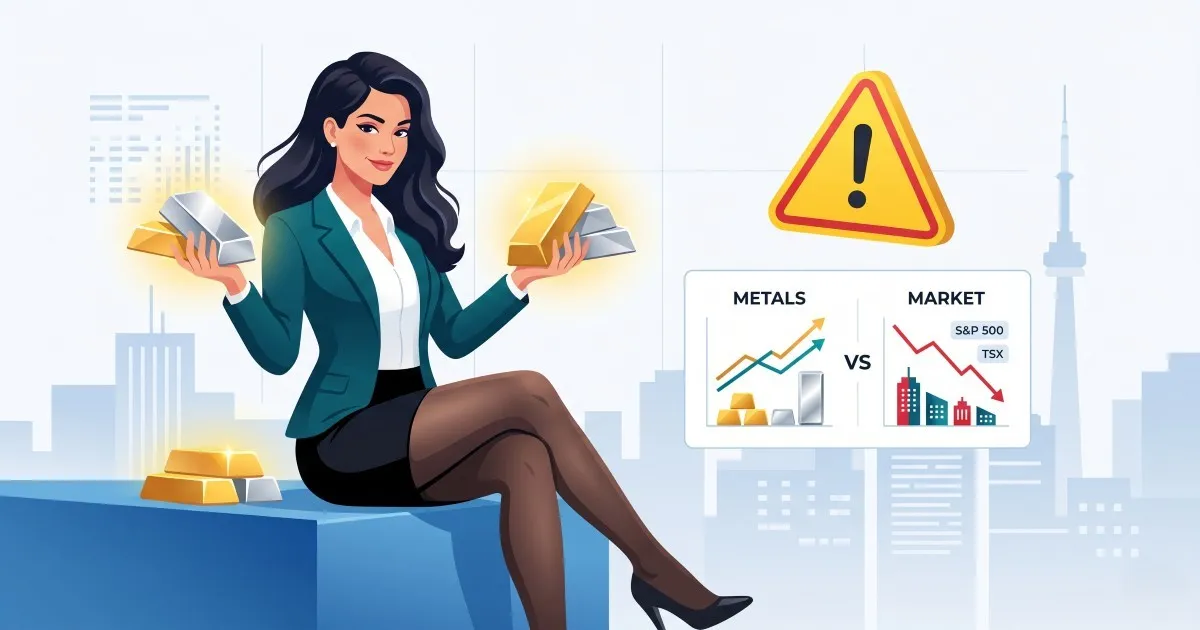
How gold, silver, and copper narratives trigger FOMO, and how to evaluate metals exposure without chasing headlines.
- By
- Anil Lacoste
- Published
- Last updated
- Reading time
- 8 min read
Key takeaways
- The drivers for gold, silver and copper prices are different so they must be traded separately.
- The price of gold tends to rise with fear, the price of silver is traditionally much more volatile and the price of copper is tied to industrial demand and expectation for growth.
- Historically, those who buy metals near the peak of a bullish trend can experience large price declines after the peak in sentiment occurs.
- Metals can be used for diversification but should only be used as part of a small allocation within a longer-term investment strategy.
For thousands of years, metals have served as financial anchors — stores of value that people reach for when the world feels unstable.
That instinct is still very much alive. When wars break out, inflation rises, or financial systems look shaky, investors around the world move money into gold, silver, and sometimes copper. Prices surge. Headlines celebrate new records. The fear of missing out intensifies.
And then, for many of the investors who rushed in at the peak, the losses arrive.
This guide explains why metals behave the way they do during crises — and how to distinguish between a sound investment thesis and an emotional trap dressed in a shiny package.
Three Metals, Three Different Stories
Not all metals move for the same reasons. It’s important to understand the logic behind each before making any investment choice.
Gold: The Classic Safe Haven
Gold’s role as a crisis asset comes from a few lasting traits:
- It holds value independently of any government. Unlike currencies or bonds, gold’s worth doesn’t depend on a country’s financial health or central bank actions.
- It has a limited supply. Unlike paper money, it cannot be printed.
- It has no counterparty risk. A bond represents someone else’s debt; gold is simply gold.
When investors worry about inflation, currency devaluation, or financial instability, they buy gold to protect their spending power. This creates a predictable trend: as uncertainty increases, gold prices usually rise.
What gold does not do: it does not produce income. It pays no dividends or interest. Its returns depend entirely on price appreciation, meaning investors who buy at the wrong time may take years to break even or may never do so.
Silver: The Dual-Role Metal
Silver is more complicated than gold, and that complexity makes it more unstable. It acts partly like gold—a safe haven during crises—and partly like an industrial metal. Silver has important real-world uses in electronics, solar panels, medical equipment, and industrial processes.
This dual nature means silver often overreacts in both directions. During a crisis, it can rise more sharply than gold. During a recovery, when industrial demand is more important, it can rise strongly too. But the opposite can happen: it can fall more deeply and quickly when sentiment shifts.
Silver’s wider price swings attract traders seeking leveraged exposure to the sentiment around precious metals, but these same swings can hurt investors who didn’t expect the volatility.
Copper: The Industrial Barometer
Copper’s behavior is influenced more by fundamentals than by emotions. As the main conductor in electrical wiring, construction, electronics, and increasingly in electric vehicles and renewable energy projects, copper demand closely follows real economic activity.
During war, military and infrastructure spending increases copper demand. During economic booms, construction and manufacturing use more copper. This makes copper less of a “safe haven” and more of an economic thermometer—a useful indicator of where global activity is heading.
Since copper’s price is based on industrial demand, it can act differently from gold and silver during the same crisis, sometimes rising for completely different reasons.
What History Actually Looks Like
Historical examples reveal both the opportunity and the danger of metal investing during crises:
The 1970s Gold Rush
During the Vietnam War, inflation and political instability plagued the United States. Investors turned to gold as trust in the US dollar faded. From 1971, when Nixon ended the gold standard, to 1980, gold prices jumped from about $35 per ounce to $850 per ounce. Those who bought early and held on saw impressive gains. However, those who entered the market at the peak in 1980 had to wait over 20 years to see those prices again.
Destruction of the 1980 Silver Market
A couple of Texas-based billionaires (Hunt Brothers), attempted to corner the silver futures market in 1979. They made massive purchases, including both physical and futures contracts, which caused the price of SILVER to increase by over 700% from approximately $6 an ounce at the beginning of 1979 to just under $50 an ounce by January 1980.
The situation took a massive turn, however, when the exchanges changed their margin requirement. As a result, the price of SILVER dropped back down to below $11 an ounce by March 1980. Many investors that had purchased SILVER at the end of 1979 and the beginning of 1980, believing they had hit upon a historic rally, incurred significant losses and would never recover their investments.
Copper & The World Wars
Copper was heavily relied upon during both world wars for everything from electrical wiring in military equipment to ammunition casings and naval vessels. Due to the overwhelming demand, many copper producers could not produce copper fast enough, resulting in many price increases. The “copper bull market” caused by both world wars continues to this day and is expected to further increase due to large scale military build-up and significant increases in defence spending and electrification throughout the 2020s.
A Repeated Pattern in Other Asset Markets
Throughout 2023 to 2025, much of the media has also amplified FOMO-like behavior in other asset classes, including housing, by promoting urgency and momentum instead of valuation and timing discipline.
FOMO Cycles in the Property Market
The price movements for real estate tend to follow an emotional and financial sequence:
- Rising Prices → Early Adopters Make Money.
- Increased Media Attention → More Buyers Become Aware.
- Grow Social Media Exuberance → FOMO Is Magnified.
- Late Buyers Flood Into Market At Very High Prices.
- Blow-Off Phase → Emotional Peak, Fundamental Pricing Ignored.
- Price Decline Quickly → Panic Selling Begins.
- Late Buyers Are Affected By Adverse Price Decrease.
Most real estate experts identify the Blow-Off Phase as the end of this cycle where both the price momentum and the power of the emotional driver are combined until the market outstrips fundamental value and creates a significant risk to all investors until the correction is finished. Since these blow-off phases can last for weeks or months, they can be incredibly dangerous: price levels will continue to rise long after a careful analytical review would indicate prices are excessive; that last wave of purchasing will create additional demand immediately prior to the inevitable price correction.
Thinking Clearly Before Investing in Metals
If you’re thinking about investing in metals, these principles can help you focus on disciplined thinking instead of emotional reactions:
1. Don’t chase runaway prices
When a metal is featured in every financial publication, the easy profits have already been made. Buying after a big price spike usually means paying for maximum optimism, and that optimism seldom lasts.
2. Match position size to your actual risk tolerance
Ask yourself honestly: if this investment dropped 40-50% and stayed there for two years, how would that affect your finances and emotional wellbeing? If the honest answer is “serious stress,” then your position size is too large, no matter how confident you feel about the investment.
3. Study the cycles, not just the current price
Metal markets move in long waves influenced by broader forces like inflation cycles, changes in industrial demand, and geopolitical factors. A metal that has been rising for two years may be in the middle or nearing the end of its cycle. Understanding historical patterns helps set realistic expectations. Looking only at the current price gives you almost no useful information.
4. Distinguish between thesis and trend
There is a big difference between “I believe gold is undervalued compared to inflation risks, and I’m building a position as part of a diversified strategy” and “gold keeps going up and I don’t want to miss out.” One is a thesis, and the other is fear of missing out. Only one leads to consistent results.
5. Opportunities genuinely do repeat
Market cycles are real and repeatable. Every metal spike will eventually see a correction, and every correction will eventually lead to a recovery. Investors who miss one cycle are not permanently shut out; the next one will come. Patience is not the same as doing nothing; it’s the discipline to wait for better conditions instead of settling for worse ones out of urgency.
A Note on Portfolio Diversification
The role of metals, specifically gold, in a well-diversified investment strategy is real, and not speculative trades based on a crisis mentality. They can provide a partial hedge against class investment underperformance; high inflation, weak currencies, and systemic stress in the financial markets.
Key word is Partial. A well-planned allocation around a small percentage of the overall portfolio held as an integrated, long-term investment will be viewed differently than rushing to buy metals at all-time highs based on the world’s news cycle.
Final Thoughts
It is completely rational and understandable to consider investing in metals during times of crisis, as they are traditional, historical stores of value for thousands of years. The instinct to reach for something that is real and has historically endured is not insane during times of uncertainty.
However, in the short-term investment world, the emotion that sometimes drives the reactionary investment is oftentimes as much responsible for volatility as fundamentals. The emotional peak of a metals rally is also the time in which you are subject to the highest degree of risk. Because of this, most people will not view the shiny trap (i.e., metals) as a trap; instead they will view this shiny trap as a readily identifiable investment opportunity and will not recognize that this shiny trap can eventually make you lose a lot of money.
The real reason that so many people lose a significant amount of money in investing is that their mistakes do not appear to be mistakes when they occur.
Think long term. Ignore the noise. And be especially sceptical of any investment that feels urgent.
For broader historical context, review the historical invest scenarios.
Frequently Asked Questions
Is gold always a safe investment during crises?
Gold is often treated as a defensive asset during periods of inflation, currency stress, or geopolitical uncertainty, but that does not mean it is always safe at any entry price. Investors who buy after strong rallies can still face long drawdowns.
Why is silver usually more volatile than gold?
Silver tends to move with both precious-metals sentiment and industrial demand, so it can react sharply to changes in risk appetite, growth expectations, and liquidity. This dual role often creates larger swings than gold.
How much of a portfolio should be allocated to metals?
There is no one-size-fits-all allocation. For many long-term investors, metals are used as a small diversification sleeve rather than a concentrated bet. Position size should reflect your risk tolerance, time horizon, and overall portfolio goals.
Educational content only. This article is not financial or investment advice. Always conduct your own research and consult a licensed financial professional before making investment decisions.

About the author
Anil Lacoste
Wealth Management Advisor
Anil provides expert financial guidance focused on personalized investment strategies, risk management, and comprehensive wealth planning.
Background
Anil Lacoste is a dedicated Wealth Management Advisor at TD based in Toronto, Ontario. He specializes in helping clients navigate complex financial landscapes by building tailored portfolios that prioritize long-term stability and growth. With a deep understanding of the Canadian and global markets, Anil’s approach is rooted in providing actionable, high-level advice that empowers individuals to meet their specific financial milestones. Whether it’s retirement security, tax-efficient investing, or estate planning, Anil’s expertise ensures that his clients' wealth is managed with precision and foresight. His commitment to transparency and professional integrity helps bridge the gap between financial goals and real-world results, always grounded in the trusted methodology and resources of TD.
Methodology note
Figures are educational estimates based on historical market data and stated assumptions. They do not include every real-world variable (taxes, slippage, fees, behavior, or account constraints). Re-run the scenario with your own inputs before making decisions.
Related articles
Related tool
Backtest this idea with the investment calculatorMove from theory to measurable historical outcomes.